
Last year I ran a minimal wardrobe challenge — something that felt either really smart or really uncomfortable. I picked 10 pieces of clothing and wore only those for 30 days. 30 days.
No exceptions. No “just this once.” Ten pieces, four weeks, and whatever came up.
I want to be upfront: this is not a challenge I’d tell everyone to do. But what it showed me about how I was building my wardrobe, and why so much of it wasn’t working, was worth every awkward morning.
This post is a follow-up to Why Your Wardrobe Feels Chaotic, where I break down the actual root cause of the “full closet, nothing to wear” problem. The challenge put that theory to the test in a real way.

The Setup: What I Picked and Why
I didn’t just grab 10 random things. I spent about an hour choosing pieces that could actually work together across multiple outfits. That selection process alone was revealing.
Here’s what I ended up with:
- 2 heavyweight tees — one off-white, one black
- 1 gray crewneck sweatshirt
- 1 gray linen overshirt
- 2 pairs of pants — one dark, one off-white
- 1 pair of shorts
- 1 pair of clean white sneakers
- 1 pair of dark loafers
- 1 baseball cap
Every piece was chosen because it connected to at least three others. That was the rule before the rule. If it didn’t plug in, it didn’t make the cut.
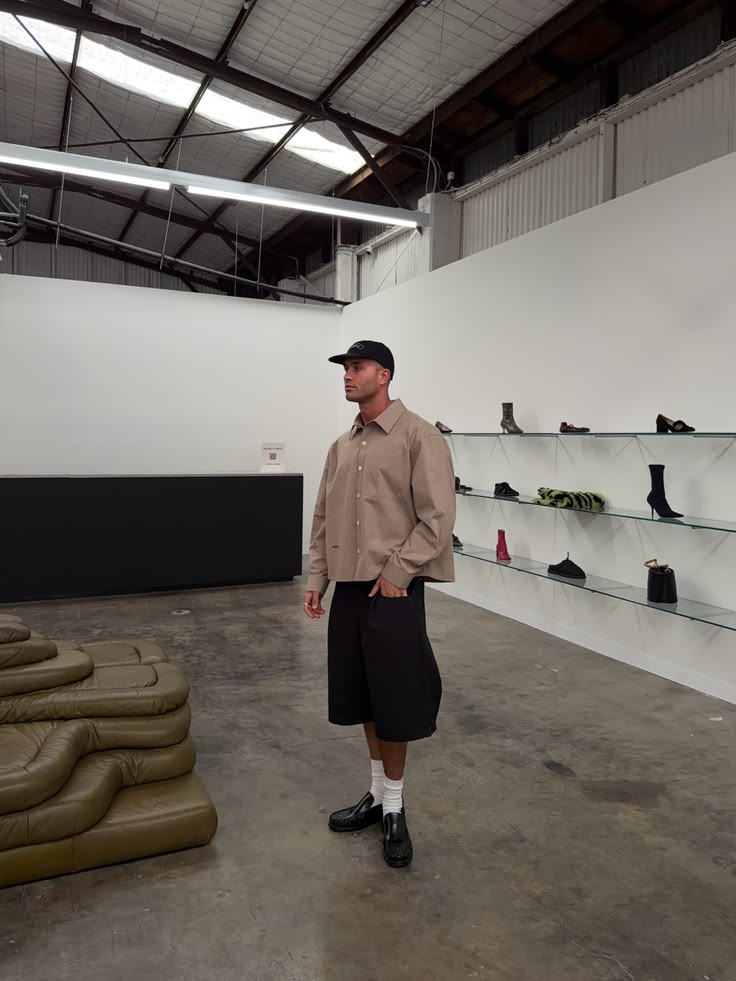
[IMAGE] Alt text: Bykobeintharath gray overshirt layered over an off-white tee with dark pants — one of the daily outfit combinations from the 10-piece wardrobe challenge
Week 1: The Friction Was Real
The first week was uncomfortable. Not because I didn’t have anything to wear. I had 10 options and they all worked. But the muscle memory of scrolling past the same pieces looking for something new was so ingrained that I kept feeling like I was missing something.
That feeling is worth naming. It wasn’t about the clothes. It was about the habit of novelty. We’ve been trained to expect constant variety, and a minimal wardrobe challenge cuts against that pretty hard.
By day five it started to click. The decision time in the morning dropped to almost nothing. Everything I had went with everything else. Outfit done in two minutes. Move on.
Week 2: Decision Fatigue Almost Disappeared
This was the biggest practical shift. When you’re not starting from scratch every morning, you stop wasting mental energy on something that doesn’t need it.
I started noticing how much time I’d been spending on outfit decisions before. It wasn’t huge in isolation, but it adds up. Five to ten minutes a day, compounded across a year, is a lot of time spent on something that should be automatic.
The research backs this up too. Decision fatigue is a real cognitive drain. The fewer low-stakes decisions you have to make early in the day, the more capacity you have for things that actually matter.
“The decision time in the morning dropped to almost nothing. Everything I had went with everything else. Outfit done in two minutes.”
Week 3: I Stopped Wanting to Shop
This surprised me more than anything.
For most of the time I’ve been building bykobeintharath, my relationship with shopping was complicated. I’d buy things, get excited for a few days, then go back to feeling like I needed something else. The cycle was always running.
Three weeks in, it stopped. Not because I was forcing restraint. Just because I had what I needed, I knew it, and nothing felt missing.
That shift in relationship to shopping is hard to describe until you’ve felt it. But it’s real, and it’s one of the most useful things a minimal wardrobe challenge can do for you.
Week 4: What I Wished I Had Done Differently
If I did this again, I’d swap one of the tees for a slightly more versatile layer. There were a few situations where I wanted something between the crewneck and the overshirt, and I didn’t have it.
That gap showed me something useful. The pieces I was missing weren’t random. They were predictable. And knowing that made adding to my wardrobe afterward much more intentional.
That’s the hidden benefit of the challenge. It’s not about permanent restriction. It’s about making visible what actually matters to you versus what you just assumed you needed.
What the 30 Days Actually Taught Me
- Most wardrobes have more than enough. The problem is coherence, not quantity.
- When pieces connect, outfit decisions stop being a cognitive task.
- The urge to shop is often a habit, not a real need.
- The gaps you find during restriction are more useful than any haul.
- Intentionality built once saves you from rebuilding constantly.
Should You Try It?
Honestly, the strict 10-piece version is more of an experiment than a lifestyle. I’m not still doing it.
But the thinking behind it, choosing only what connects, buying only what fills a real gap, treating your wardrobe like a system instead of a collection, that part I kept. And it changed how I build and how I shop.
If you want to start smaller, the minimalist wardrobe reset in the pillar post is a better starting point than jumping straight to 10 pieces. Same principles, less friction.
The Pieces That Made It Work
The bykobeintharath basics are what I reached for most during the challenge. Built to connect, built to last. Shop the collection at bykobeintharath.com.